VCRs for rent: Shoddy Goods 087
4
If million-dollar ideas were easy, we’d all be millionaires. Jason Toon here with another Shoddy Goods, the newsletter from Meh about consumer culture. This time we look at one such business model that was obsolete almost as soon as it premiered.
The early days of home-video rental were a free-for-all. I don’t just mean the format wars between VHS and Beta. When my family briefly had a VCR in 1981, we had to rent movies literally from some guy’s basement. Appliance stores soon stepped into the breach, with video rentals as bait to sell VCRs and TVs. Then, in the space of a few years, my neighborhood in St. Louis went from zero dedicated video stores, to a dozen, back down to two.
Into this Wild West village came riding a passel of hungry outfits, each sure they’d figured out how to serve the vast majority of American households who would never be able to afford $1200 for a pricey VCR. All these hopefuls learned an expensive lesson in the risks of betting on today’s technology in tomorrow’s market.
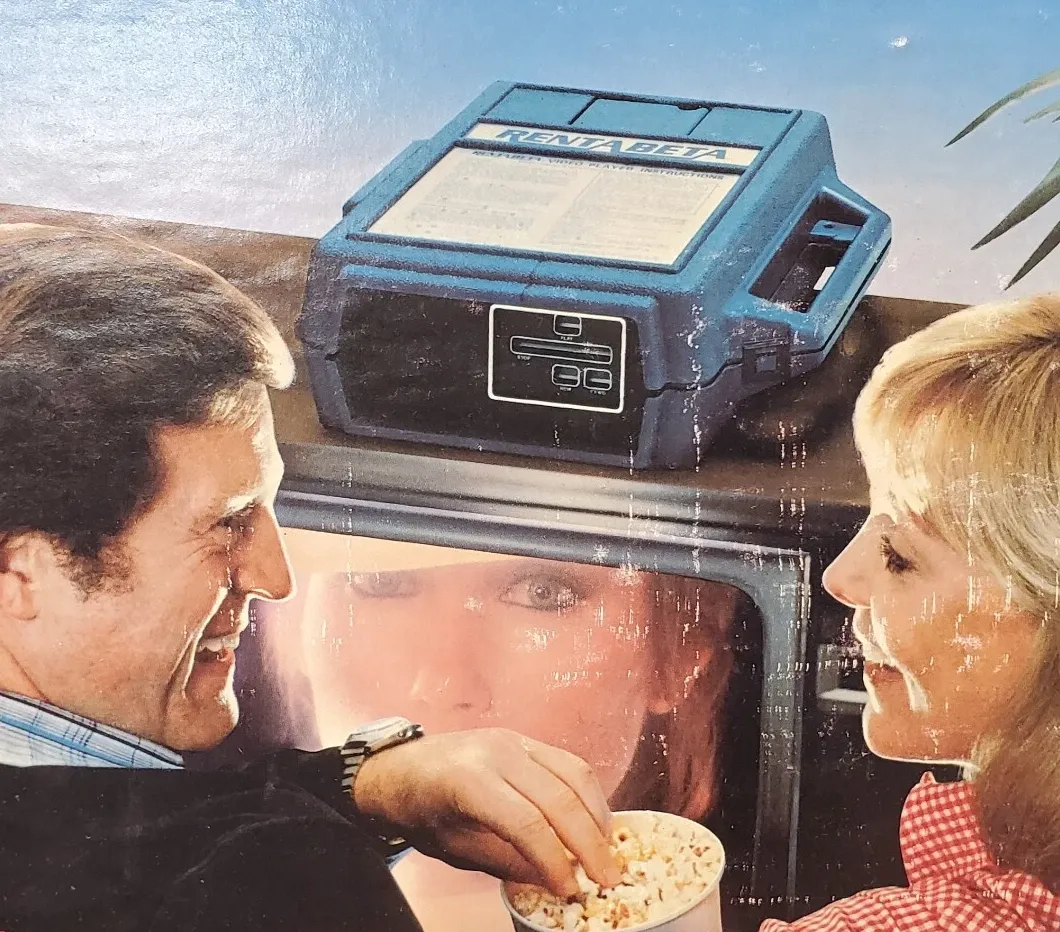
Something rented, something blue
Be kind, don’t rewind
The first commercial VCRs were revolutionary, but freedom from the tyranny of TV scheduling came at a dear price. When the Betamax player was released in 1975, it retailed for $2,295 - almost $14,000 in today’s dollars. Two years later, the more reasonable VHS player debuted at $1,200, still a whopping $6,400 today. Prices didn’t moderate much by the turn of the decade, with either type setting you back a grand or so.
So in 1981, Superscope, a South California electronics company best known for their Marantz audio components, announced Rentabeta. For $12 on weekday nights or $15 on weekends, customers could go into the Rentabeta outlet near them - generally the same hi-fi stores that already stocked Superscope products - and take home a videotape player for the night with the movie of their choice locked inside.
But not just any video tape player. The Rentabeta machine was a rugged blue plastic thing with a handle, like a typewriter case, that weighed some 16 pounds. All the functions except play, pause, and stop were disabled - including rewind. You got one play for your money, and if you missed something, too bad. Rent it again. As for using the Rentabeta player to watch any other tapes? Forget it. You were limited to the 25 or so titles stocked by each outlet.
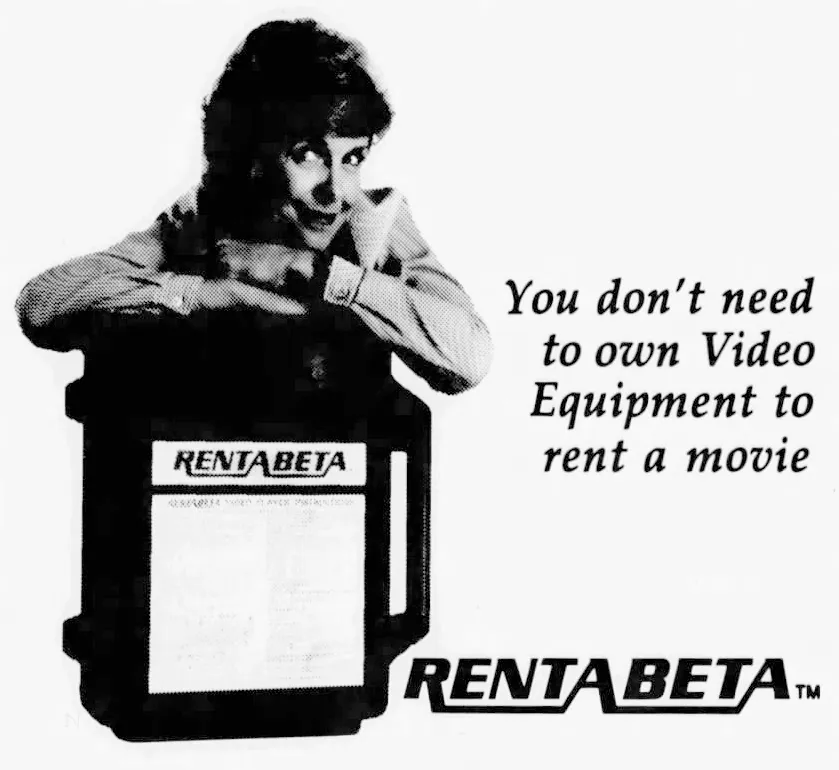
You don’t need to capitalize Video Equipment, either
“The key to this plan is freedom of choice and affordable prices,” said Superscope founder and president Joe Tushinsky, apparently with a straight face. Fifteen bucks for one at-home viewing at a time when an average movie ticket was less than $3 seems like hard math to square - but Tushinsky wasn’t the only one who thought it added up.
(Speaking of adding up, you can add a bunch of outlets and USB ports with this four-pack of wall-taps today at a crazy low price on Meh. Buy a bunch and get our boss off our back!)
“Nobody can catch us”
In 1983, Phoenix-based Portavideo rolled out its own plastic-encased rental player, but without the one-movie, one-viewing restrictions of Rentabeta. “Bring home a Portavideo and Humphrey Bogart… and you can play it again for free,” their ads promised.
“Portavideo will be in every neighborhood in America within 18 months to two years,” the company’s vice-president of marketing, Joe Bowman, told the San Francisco Chronicle in 1983. “Nobody can catch us. We want to be the Hertz of the business, though there’s certainly room for an Avis or two.”
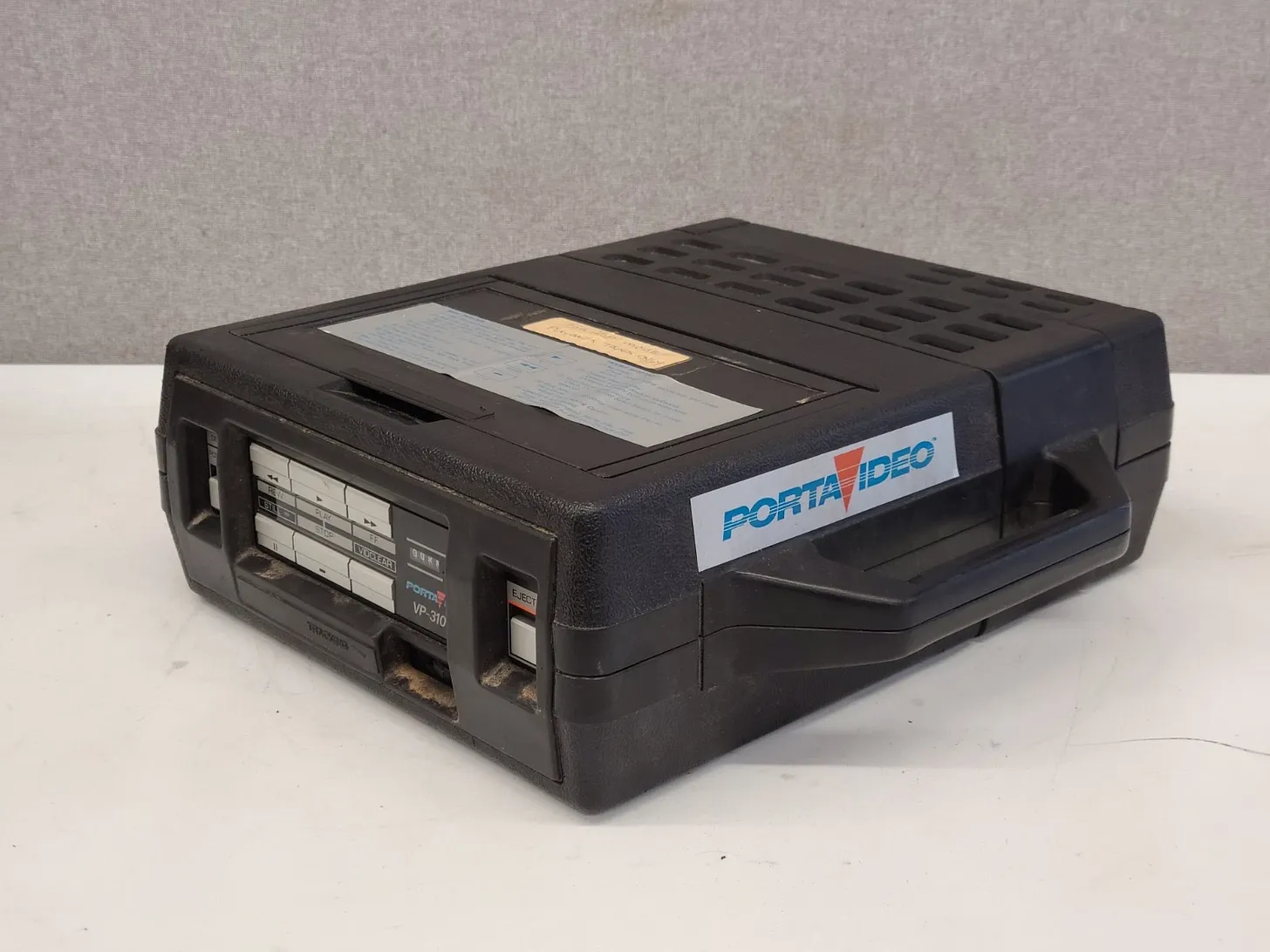
Movie night in shining armor
Some of those “Avises” are quoted in the same story, including Rentabeta, whose general manager Howard Siegel says “We will see tremendous growth in the next couple of years.” Meanwhile, a Bay Area company called Movie Machine claimed “We have about 3,500 machines out there now, and we’ve really just started the attack,” in the words of their marketing director, Richard Vigo.
A Rentabeta distributor named Louis Snyder sums it up: “The video explosion is finally reaching the masses through the rental industry. For the first time, we are making the VCR affordable to everybody.”
Problem was, falling VCR retail prices were making it even more affordable to buy one.
“No longer a novelty”
The first basic VCRs under $300 hit the market in 1984, with the average midrange VCR priced around $500, according to the New York Times. "It’s no longer a novelty, something for only the affluent or the videophile,‘’ said Frank McCann, vice president of the RCA Corporation’s consumer electronics division.
Annual VCR sales through the early '80s almost doubled from year to year. From the estimated 2% of US households who had a VCR in 1980, that number was 14% by 1984, 33% by 1986, and 62% by 1989.
To compete, VCR rental prices fell, too. Rentabeta and Portavideo each had to maintain a mountain of finicky rental VCRs and fleets of trucks to shuttle units between franchise locations and local service centers. That’s a lot of overhead. Prices could only go so low, and customers could do the math: why spend even $8 for one night with a VCR when you could buy one for $299 and use it every night, plus tape shows off of TV?
The math caught up with them. Rentabeta seems to have fizzled out in 1985, as Superscope dumped its less profitable assets (essentially everything but Marantz). Portavideo held on a few years longer, popping up in video store ads into 1989, but Joe Bowman’s big dreams never came close to reality.
I’m sure there was a moment when renting VCRs seemed like a brilliant idea. Nowadays, we all expect electronics to get cheaper over time, but the VCR was the first mass consumer technology to set that expectation. An old-school generation of hustlers - Superscope’s Tushinsky was born in 1910 - learned the hard way that business doesn’t have a rewind button, either.
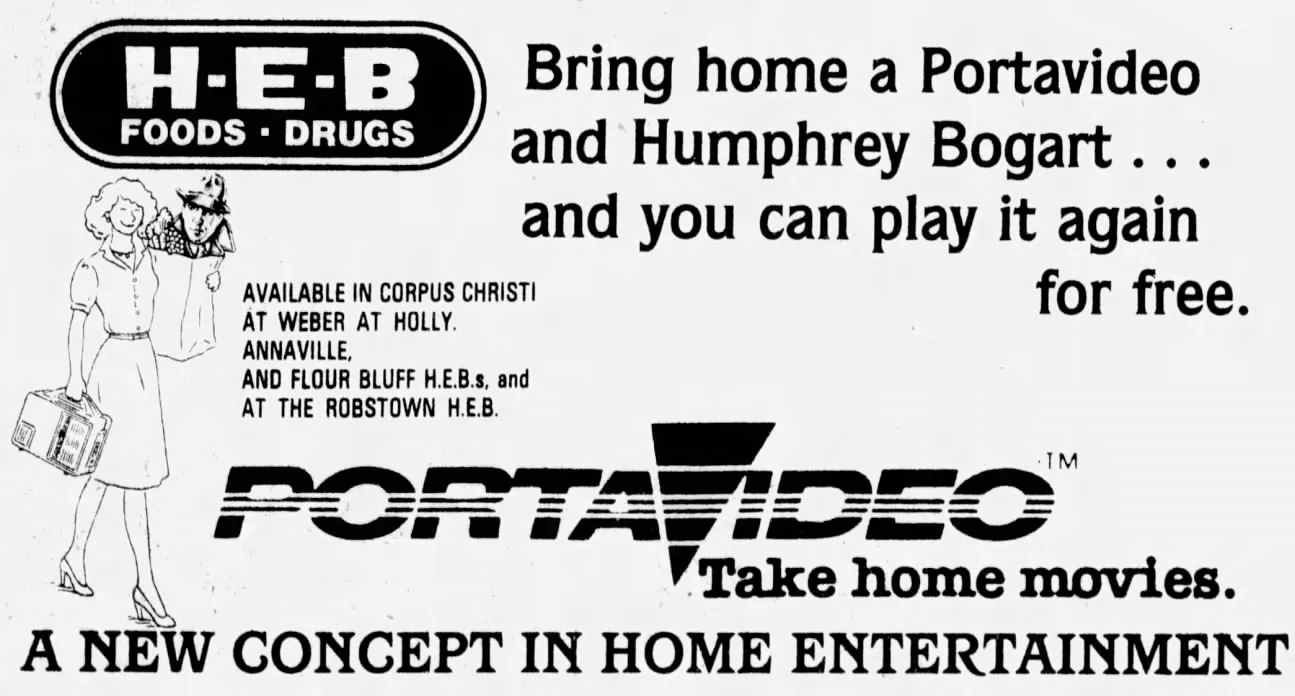
Here’s renting you, sweetheart
We definitely rented a VCR at least once in the 80s. I remember steep fees if you didn’t rewind the movie—unfortunately we didn’t realize you should hit stop and then rewind. So we sat there, holding the rewind button down on our first rental, Yentl, watching as a reversing young Barbra Streisand travels to Easten Europe and starts dressing as a boy.
*Do you remember your first home movie rental? How early was your family on getting new tech and electronics? Let’s hear about it in this week’s Shoddy Goods chat.
—Dave (and the rest of Meh)*
Now that you’ve enjoyed our new release, cue up one of these past Shoddy Goods stories:
- 12 comments, 3 replies
- Comment
My mom owned a video store with my uncle in the 80s. I don’t remember my first video, because we saw all of the new stuff as it came out.
@Thumperchick Wow! Lucky you! We spent much of the 80’s serving overseas, mostly Europe, with four then five kids(took us a while to figure that out!) and I’m not sure how we would have survived with VHS tapes! Luckily we had a couple of kind relatives who would record stuff, especially Disney and other kid stuff from TV and send us regular care packages. I think every soldier became somewhat of an expert in VCR maintenance!
I don’t remember our first VHS rental, but our first Laserdisc rental was Close Encounters of the Third Kind. We never took it back for some reason; my uncle ended up with it and still has it in storage.
Somewhere in the house is an early 1980s RCA VCR that my folks bought from Sears.
@narfcake That may be becoming valuable!
I don’t remember our first rental movie. I do remember browsing in the rental store to pick out something to watch.
I am currently looking for a player to buy or borrow to watch some old family recordings. I had one but it broke beyond my ability to repair. I have the setup to make a digital copy so the plan is to share the choice clips next family get together.
We never rented a VCR but we owned one before 1986. We rarely rented movies, though, we mostly taped them when HBO and Disney did their yearly free trial weeks and then watched them forever. (We didn’t get reception so we had basic cable which was VERY basic, about 12 channels, but once a year the premium channels would try to hook you with a free week. My mom never bit but we got a lot of good movies out of it.)
Can’t remember our first video rental, but I distinctly remember my dad buying us our first VCR and microwave, all in the same weekend. It was probably around 1985 and my dad won the pick four lottery which paid out $2000. He took that money and bought us a VCR with remote and microwave. I was the first of my friends to have such things in our house. I felt pretty cool watching Growing Pains and Family Ties episodes that we taped off the TV. My mom even got to tape General Hospital while she was at work.
Never rented vcrs but bought. Got some v good ones from pawn shops, both stereo hifi VHS and BetaMax. The VHS tapes were cheaper and IIRC could hold 6 hours = 3 avg movies. The Sony’s held 5 hrs, I think, but had better video and audio quality, so got the keeper movies from HBO ( or Playboy Channel on a free, unscrambled weekend). I also did marathon recordings from the original MTV year-end Top 100 Music Videos for several years. Those were great, for then. I also realized that BetaMax tapes were more cost-effective for audio-only recording than high-end audio casettes when some of the stereo FM stations of the day would play complete albums. (Precursors to today’s streaming?)
Snide bar comment: More evidence of Sony’s engineering being higher quality than their corporate decisions.
Don’t get me started on their PSP kept in chains or their bricking of the Dash internet appliance, both moves which I’m convinced cost them tens of millions of dollars, both in goods sold and goodwill
We bought our first VCR in 1988. In 86 I ended up on bedrest for the last week of my pregnancy, having to stay on my left side. Which makes reading a challenge. Fortunately we had a cable connection there, so my husband brought up the TV (tube), and hooked that up.
The only premium channel we had was HBO, and movies were repeated frequently. I think I watched Electric Dreams 4-5 times…
When I found myself pregnant again in 88, we bought a VCR. That may have been the first year they could be programmed onscreen, so it was fairly easy. I couldn’t understand all the complaints about needing a Ph.D in electronics to program one, until I tried to set up a recording on my parents’ older VCR.
@krez56 Haha, I remember “Electric Dreams month”. One of the first months we had cable, too.
I’m reminded of two things:
VCRs and a menu of about 200 titles; you’d go in with your buddies and watch a movie. Where I first saw The Life of Brian.
The first movie I remember watching on a VCR was The Muppet Movie. Then, years later, when I had a kid of my own and we got our first DVD player, I looked for something cheap to buy for our first DVD, and there it was, for $9.99: The Muppet Movie.
Friend’s family had a VCR before we did. Movie that came with it was “What’s Up Tiger Lilly”. We watched it about a hundred thousand times. Our first VCR cost $900 and came with a corded remote. You can imagine how long that lasted in a household with 6 young kids.
Fixed a broken circuit board on that one once after one of the times it got pulled off the shelf. Fixed many others by replacing belts, idler tires, and that little lamp that sticks up into the cassette.
It’s entertaining to discuss VCRs. But what about its younger relative, the PVR? You can find onlya few on eBay now.
The point is, terrestrial TV is being phased out.
Eventually, we’ll all end up having to subscribe to a bunch of streamers for the benefit of watching TV.
My PVR lets me record linear / terrestrial TV.
Streaming intentionally doesn’t allow that, unless you have tech skills.
I like to avoid subscription models, so when terrestrial TV finally goes dark, the challenge will be to hook up a set that bypasses copy protection and has a scheduling facility.