The Atari 2600 was my first home gaming system. The quarters I would save, I told my parents…Yeah I just played twice as many games once I had this. LOL
@capnjb You call that big compared to the itty-bitty, teeny-weeny one? Here’s an example of the computers I worked on when I started in the business in the late '70s as a software engineer at Prime Computer.
FYI, each one of those plastic things is a cover for a disk pack (we didn’t use the term hard drive back then). The larger one is 300 MB and the smaller ones are 80 MB–yes, I mean MB not GB. The cases are sitting on top of what looks like a washing machine; the disk pack is inserted into it, i.e., the whole thing is the equivalent of the wallet-sized hard drives we have today.
@capnjb@ItalianScallion I remember (in my early days) when a more senior engineer at work left and I inherited his Kayliss hard drive (with one fixed and one removable 80MB platter). Graduating from floppy drives I was thrilled but couldn’t imagine what I would do with all that space! (The whir of the platters was soothing after the buzz-clack of the floppy drives though )
@ItalianScallion My very first job was in a place just like that. My dad knew the owner so I had a summer internship in the early 80’s at a datacenter. I basically sat at a terminal and waiting for requests then would get the requested tape and put in on the right machine. There were also probably a dozen hard drives… which really were the size of washing machines (and that’s exactly how I remember them) and the platters looked like cake carriers Exactly like in the foreground of your photo
@capnjb Yes, that’s it! And to think they were called “minicomputers”! Yeah, mini compared to the giant IBM, Univac, etc. computers. I worked a summer doing just what you were doing at Digital Equipment Corporation (DEC), the premier minicomputer maker of the '70s and '80s. I remember playing around at DEC with a prototype of what would become the widely used telnet software, and at Prime with the prototype of what became the email standard protocol (RFC822) still in use today.
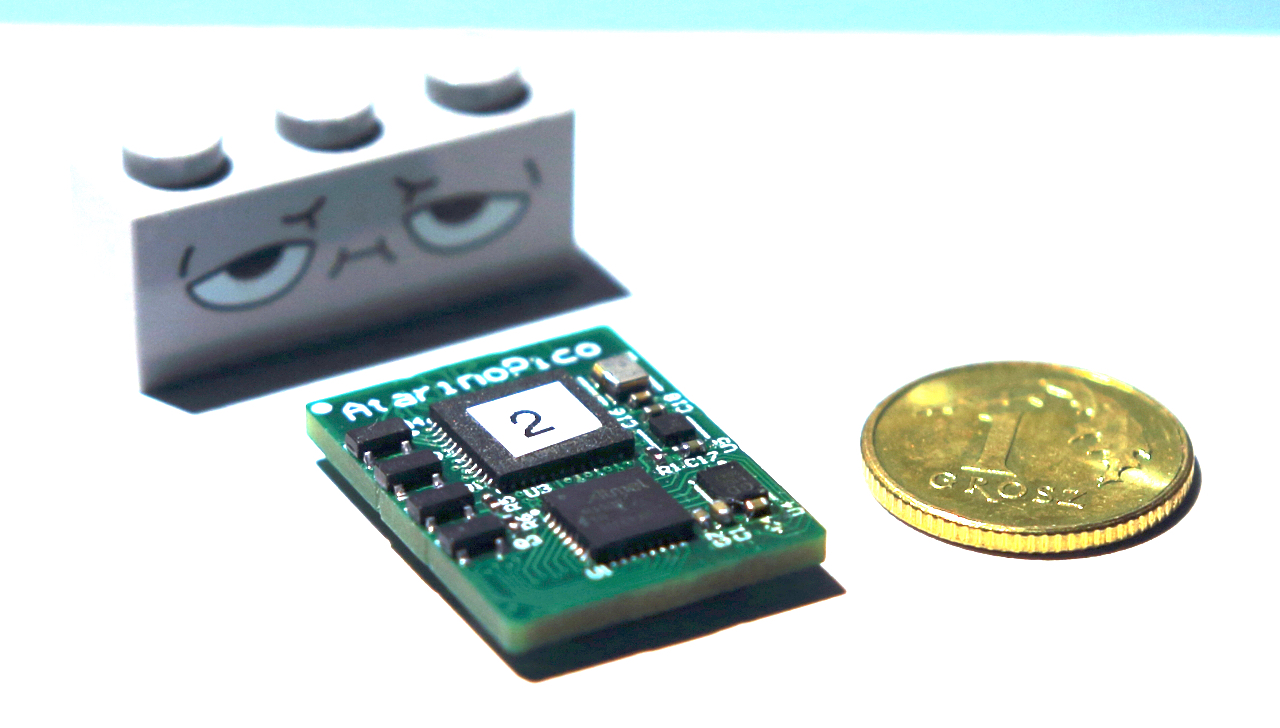
The Atari 2600 was my first home gaming system. The quarters I would save, I told my parents…Yeah I just played twice as many games once I had this. LOL
That’s cool!
Very cool!
I have no idea how big or small that coin is. Should have used a banana for scale.
@ItalianScallion You sure about that?
@Kyeh Thanks for a good morning laugh! Nice way to start my day!
Not even a little
@capnjb You call that big compared to the itty-bitty, teeny-weeny one? Here’s an example of the computers I worked on when I started in the business in the late '70s as a software engineer at Prime Computer.

FYI, each one of those plastic things is a cover for a disk pack (we didn’t use the term hard drive back then). The larger one is 300 MB and the smaller ones are 80 MB–yes, I mean MB not GB. The cases are sitting on top of what looks like a washing machine; the disk pack is inserted into it, i.e., the whole thing is the equivalent of the wallet-sized hard drives we have today.
@capnjb @ItalianScallion I remember (in my early days) when a more senior engineer at work left and I inherited his Kayliss hard drive (with one fixed and one removable 80MB platter). Graduating from floppy drives I was thrilled but couldn’t imagine what I would do with all that space! (The whir of the platters was soothing after the buzz-clack of the floppy drives though )
)
@ItalianScallion My very first job was in a place just like that. My dad knew the owner so I had a summer internship in the early 80’s at a datacenter. I basically sat at a terminal and waiting for requests then would get the requested tape and put in on the right machine. There were also probably a dozen hard drives… which really were the size of washing machines (and that’s exactly how I remember them) and the platters looked like cake carriers Exactly like in the foreground of your photo
@capnjb Yes, that’s it! And to think they were called “minicomputers”! Yeah, mini compared to the giant IBM, Univac, etc. computers. I worked a summer doing just what you were doing at Digital Equipment Corporation (DEC), the premier minicomputer maker of the '70s and '80s. I remember playing around at DEC with a prototype of what would become the widely used telnet software, and at Prime with the prototype of what became the email standard protocol (RFC822) still in use today.