Diesel of the Day 7/10: F-M H24-66
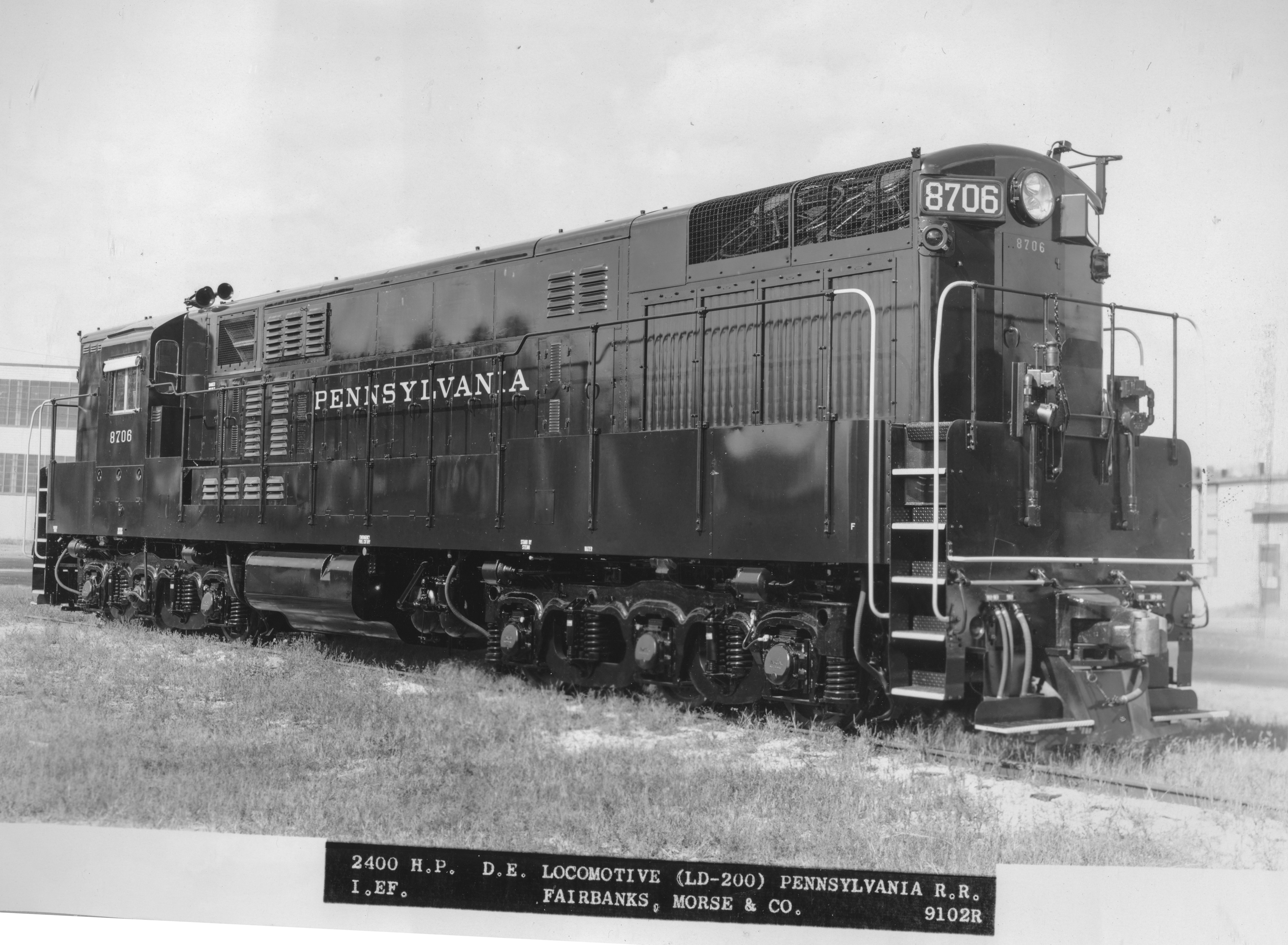
12Today we have a rather curious and unusual diesel from the early days of dieselization: the Fairbanks-Morse H24-66 Train Master. When it was introduced in 1953, it was the most powerful diesel locomotive in the world, and its engine is what made it unique - it produced 2,400 horsepower using 12 cylinders and 24 pistons. Allow me to explain! The Fairbanks-Morse model 38D-8 1/8 two-stroke supercharged engine is of an opposed piston design. It is an inline 12-cylinder block, but instead of each cylinder containing a single piston pressing against a cylinder head, each cylinder holds two pistons facing each other. Each set of 12 pistons is driven by its own crankshaft, one on top of the engine and the other underneath. The reasoning behind this unusual design is to cram twice as much power into the space normally occupied by a single conventional engine design. It worked well, and the Train Masters were known for incredible pulling power and rapid acceleration. However, maintenance was a headache, due to the engine needing to be removed from the locomotive to service its lower half, and they also tended to consume cooling water at an alarming rate. Competing designs from EMD, Alco, and GE soon took over the H24-66’s market share as conventional engine designs caught up in the horsepower department. Of the original production of 127 units built between 1953 and 1957, only one was preserved, Canadian Pacific number 8905, cosmetically restored and on static display. The picture today is a Pennsylvania Railroad builder’s photo, with specifications.
- 4 comments, 5 replies
- Comment
As an aside, locomotives made up only a fraction of the applications for the 38D-8 1/8 opposed piston engine. It was, and is, used extensively and to great effect in US Navy submarines and surface vessels, stationary power plants, and more. The engine is still manufactured by F-M today in Beloit, Wisconsin.
Really enjoying Diesel of the day.
Surprised to have seen a CP locomotive pull through Charlotte, NC. I was excited when I read today’s post, then double checked my CP number. My memory was off by 40. Attached is my picture of the Canadian Pacific 8945 ES44AC - which was heading an unusual combo of Norfolk Southern & CSX.
Here is the continuation - again sorry it was shot out of a moving car window
@Euniceandrich Glad you are liking these! I hope I’ve expanded some brains
@Euniceandrich @PooltoyWolf I’ve been enjoying them!
@PooltoyWolf More than expanding my brain, you’re causing me to lose a half hour or more every day as I fall down the rat hole of wikipedia, etc. “Two pistons, one cylinder, you say… let me research that…” and then I’m lost.
I blame you.
Well done!
@simssj This is a high compliment for me ^~^
@PooltoyWolf
I am finally getting around to reading these. So interesting.
This is one hell of an engine.
@f00l Glad to be entertaining!